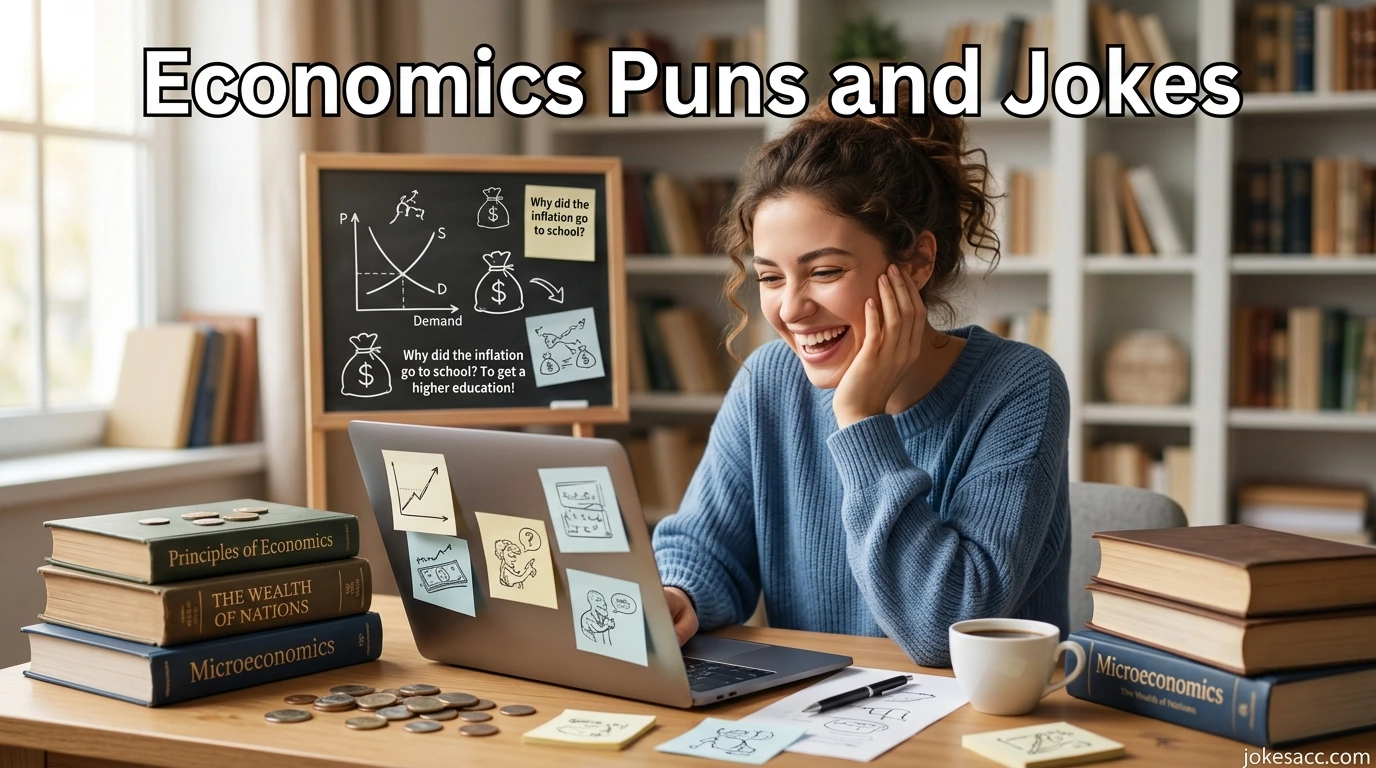
Economics doesn’t have to be all dry graphs and dense prose — sometimes the best way to remember a concept is with a good laugh. Whether you’re an undergrad cramming for macro, a policy nerd scrolling headlines, or someone who just likes witty wordplay, these economics puns and jokes turn supply curves into supply curves of laughter.
We’ll riff on inflation, GDP, game theory, behavioral quirks, banking, and everything in between — with short, shareable lines you can drop into lectures, slides, Tweets, or coffee-break conversations.
Consider this your diversified portfolio of humor: low risk, high amusement, and surprisingly educational. Read on for themed sections, SEO-savvy terms like supply and demand, inflation, fiscal policy, GDP, market structure, behavioral economics, and a big stash of jokes guaranteed to give you (and your classmates) marginally more happiness.
Classic Economics Puns and Jokes
- I tried to sell my economics jokes — demand was elastic, supply was ironic. 😄
- Economics humor: where invisible hands get a standing ovation. 👏
- I have a PhD in dad jokes—my major was pun-omics. 😅
- I asked for a bailout for my sense of humor — they said “no fiscal pity.” 💸
- My jokes are like recessions: they come and go, but people always remember them. 🔁
- I’d tell you a market joke, but it’s still in beta (and inelastic). 🧪
- Economists love jokes with good models — especially ones that fit. 📈
- Supply me with cheese and my punchlines will expand. 🧀
- I tried to price my puns — turns out they’re priceless. 💎
- My humor has diminishing returns—use it wisely. 📉
- A well-timed pun yields high social capital. 🤝
- My comedy follows rational expectations—until I forget the punchline. 🤔
- Jokes are like public goods: everyone wants to laugh for free. 😂
- I offer free market humor—no tariffs, only smiles. 🌍
- If laughter were GDP, I’d be a booming economy. 📊
Supply & Demand Puns (Market Mechanics)
- My puns are in high demand but low supply—apply now. 🔥
- When demand for laughs rises, the supply of jokes rallies. 📈
- My comedy reached equilibrium—everyone laughed equally. ⚖️
- Elastic jokes stretch your patience; inelastic ones hit every time. 🧵
- I shifted the demand curve to the right with one great punchline. ➡️
- Scarcity of humor? Time to increase production. 🏭
- Surplus of dad jokes? That’s a market failure of taste. 🙃
- Price ceilings on puns lead to black-market groans. 🚫
- Price floors for quality jokes—no rotten punchlines allowed. 🧱
- When supply shocks hit, improv is our emergency policy. 🚨
- Perfect competition in comedy means everyone wants the last laugh. 😆
- Monopolistic jokes differentiate with better timing. 🎭
- Externalities: my punchline made the whole room smile. 🌟
- If supply is limited, consider rationing chuckles. 🪄
- Market clearing? When the room laughs and the mic cools down. 🎤
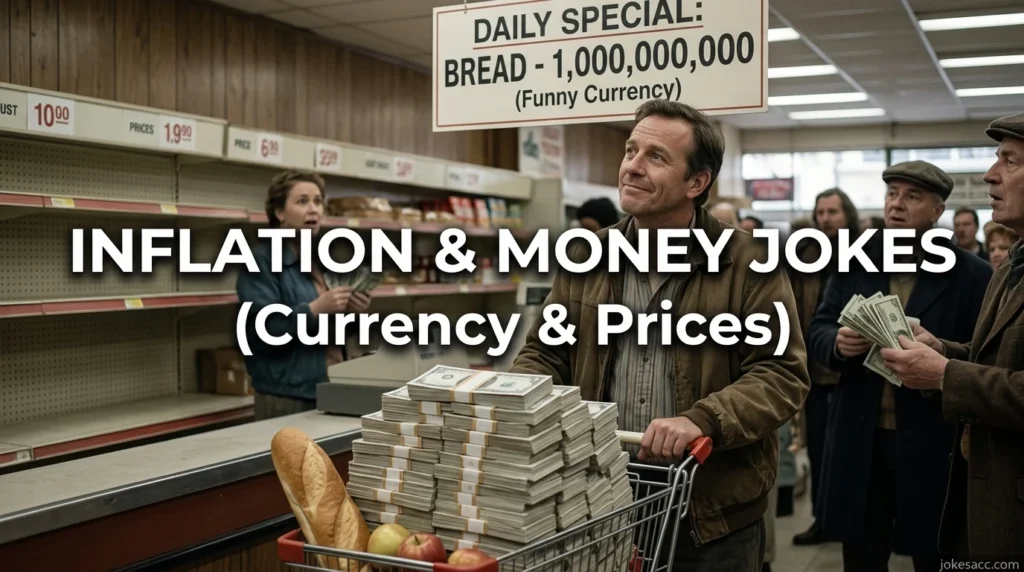
Inflation & Money Jokes (Currency & Prices)
- My jokes about inflation keep expanding year after year. 🎈
- Prices rose, but my standards for puns rose faster. 📈
- I printed money for laughs—now we have punflation. 🖨️
- My bank account experienced hyper-punflation. 😅
- Inflation: when your jokes cost more energy to laugh at. 🔥
- Central bankers approve of strong jokes, stable delivery. 🏦
- Money talks—my jokes get it to say “ha.” 💬
- I tried to store value in puns; they depreciate if ignored. ⏳
- My punchlines had too much inflation—now they’re bloated. 🎈
- If laughter were currency, my account would be overflowing. 💰
- The optimal inflation for comedy: mild and surprising. 🧂
- Real humor = nominal humor adjusted for mood. 📉
- Quantitative easing? Just add more dad jokes. 🧑🍳
- My jokes have strong purchasing power in small rooms. 🛍️
- The Fed: “We aim for 2% laughter growth.” 🎯
Student Economics Jokes (Campus Life)
- Economics major: spends three hours debating the price of coffee. ☕
- Our study group’s production function equals coffee plus groans. ⚙️
- Exam curve? More like survival-of-the-fittest curve. 🧠
- My GPA follows a business cycle: boom midterms, slump finals. 📉
- Office hours: where attendance meets marginal benefit. 🕰️
- My textbook has high memorability but low entertainment elasticity. 📚
- Students optimize sleep until the deadline hits. 😴
- I majored in “Supply and Demand”—minor in microwave economics. 🍲
- Group projects have large coordination costs and comedic externalities. 🤝
- Student loan = long-term financial elegy. 💸
- Finals create a temporary increase in coffee demand. ☕
- My study notes have diminishing marginal returns. 📝
- Econometrics: the art of making models look like predictions. 📊
- College budget constraint: ramen now, pizza later. 🍜
- I attend lectures for the diagrams and the snacks. 🍪
Macroeconomics Puns (Big Picture)
- Aggregate demand for humor keeps the economy lively. 🧩
- Fiscal policy: when your government gives out free dad jokes. 🏛️
- Keynes said there’s hope—especially when the punchlines stimulate. ✨
- Monetary policy: adjusting interest rates of laughter. 📉
- My comedy stimulus package includes extra sarcasm. 💼
- Business cycles: my jokes peak in good times, crash in exams. 🎢
- Trade-offs at the macro level: growth vs. more vacation puns. 🏖️
- My macro model predicts a 100% chance of chuckles. ☀️
- Sovereign bonds? I prefer sovereign one-liners. 🏦
- Full employment of jokes means no room for silence. 👔
- The multiplier effect: one laugh begets many more. ➕
- Inflation-targeting comedians: stable delivery, steady laughs. 🎯
- My macroeconomy has healthy growth in the funny sector. 📈
- Recession-proof humor: timeless and adaptable. 🛡️
- My policy mix: tax the boredom, subsidize wit. 💡
Microeconomics Puns (Choices & Incentives)
- Marginal benefit of my pun: immediate joy. 🌟
- Marginal cost? Slight embarrassment if it flops. 😳
- Utility maximized: pick the joke that yields most smiles. 😊
- Opportunity cost: telling jokes vs. studying—choose wisely. 📚
- Indifference curves for dad jokes look suspiciously similar. 🔁
- My utility function includes cheese and sarcasm. 🧀
- Price discrimination: charge your friends more groans. 💰
- Time allocation: jokes now, regrets later. ⏰
- Firms maximize profit; I maximize punchlines per minute. ⚙️
- My preferences reveal a love for puns over silence. 💬
- Consumer surplus = laughs you didn’t expect to get. 🎁
- Producer surplus = extra laughs beyond the cost to create. 🏭
- Perfect information would ruin the timing of a joke. 🤐
- Behavioral micro: I buy snacks even when it’s irrational. 🍫
- Contracts: verbal promises to laugh at each other’s jokes. ✍️
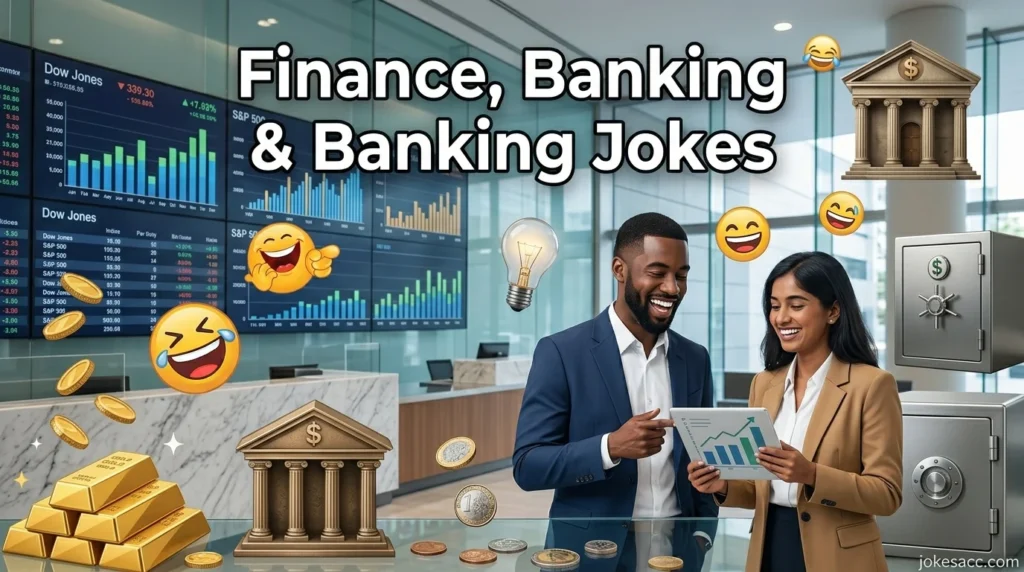
Finance, Banking & Banking Jokes
- My money manager is a stand-up economist. 🧑💼
- Bankers keep calm and compound interest. 📈
- I made a withdrawal from my joke account—interest was paid in smiles. 😊
- Hedge funds choose witty hedges. 🌿
- My liquidity is measured in snack accessibility. 🍿
- The easiest loan to get is a loan of laughter. 🤝
- Credit score: how likely you are to return a laugh. 🧾
- ATM: Automated Teller of Merriment. 🤖
- Safe deposit box: where we keep the best punchlines. 🔐
- My bank account and I are on different fiscal planets. 🌍
- Financial crises are just jokes with bad timing. ⏳
- Mutual funds are like mutual laughs—shared returns. 🤝
- An actionable portfolio includes a few zingers. 📊
- Banks appreciate deposits of goodwill and jokes. 🏦
- Interest rates up? Time to invest in dad jokes. 📈
Investment & Portfolio Puns
- Diversify your jokes—don’t put all puns in one basket. 🧺
- My portfolio includes stocks, bonds, and comedic timing. ⏱️
- Bulls buy; bears laugh politely. 🐂🐻
- Compound interest works on humor: reinvest your laughs. 🔁
- Risk tolerance: how many puns you can endure. 🎢
- Blue-chip jokes are classics that never grow stale. 🏅
- IPO of puns: everyone wants in on the initial groan. 🚀
- Short selling bad jokes? Dangerous strategy. ⚠️
- Asset allocation: 50% sarcasm, 50% cheese. 🧀
- Rebalancing: move jokes from cringe to clever. ⚖️
- Market cap of laughter depends on room size. 🪑
- Futures market: betting on which pun lands next. 🔮
- Yield curves sometimes look like surprise punchlines. 📉
- Value investing: find underrated one-liners. 🕵️
- My risk-free rate is measured in quiet nods. 🤫
Recession & Recovery Jokes
- Recession: when even the jokes tighten their belts. 🧭
- Time for a comedy stimulus—free puns for everyone! 🎁
- Recovery looks like laughter returning to the room. 😊
- The unemployment of smiles ended with a great punchline. 👔
- Depression in the market, not in the mood—call for jokes. ☎️
- Fiscal cheer: government-sponsored dad joke hour. 🏛️
- The economy contracted until someone told a really good pun. 📉
- Recessions are temporary; the memory of a good joke lasts. 💬
- Economic recovery often follows a shared laugh. 🔁
- My humor sector is countercyclical—busier in recessions. 📈
- Stimulus check for laughter: check your inbox. 📩
- Hysteresis? Only in old jokes that refuse to leave. 🕰️
- Output gap closed when the room finally laughed. ✔️
- Swap sadness for snickers—a happiness swap. 🔄
- Recovery is a series of small smiles compounding. 🌱
Opportunity Cost & Trade-Off Puns
- Choosing silence over a pun? That’s an opportunity cost. 🤐
- I traded studying for giggles—net utility positive. 📚
- You can’t have both sleep and late-night comedy. 😴
- Time spent on puns could have been spent on productivity—worth it. ✅
- Every choice forfeits an alternative—choose the best laugh. 😂
- My trade-off: instant joy vs. potential embarrassment. 😬
- Budget your time: allocate some to humor. ⏳
- I sacrificed calories for flavor and punchlines. 🍕
- The marginal cost of telling a pun is usually low. ➕
- My highest value alternative was nap-time—pun still won. 💤
- Opportunity cost in love: date or dinner? Quesadilla first. 🌮
- To maximize utility, always include a joke. 🌟
- Time is scarce—spend it on things that yield smiles. ⌛
- Trade-offs are the spice of economic life. 🌶️
- Rational choice: laughter more valuable than worry. 🤗
GDP, Growth & Development Jokes
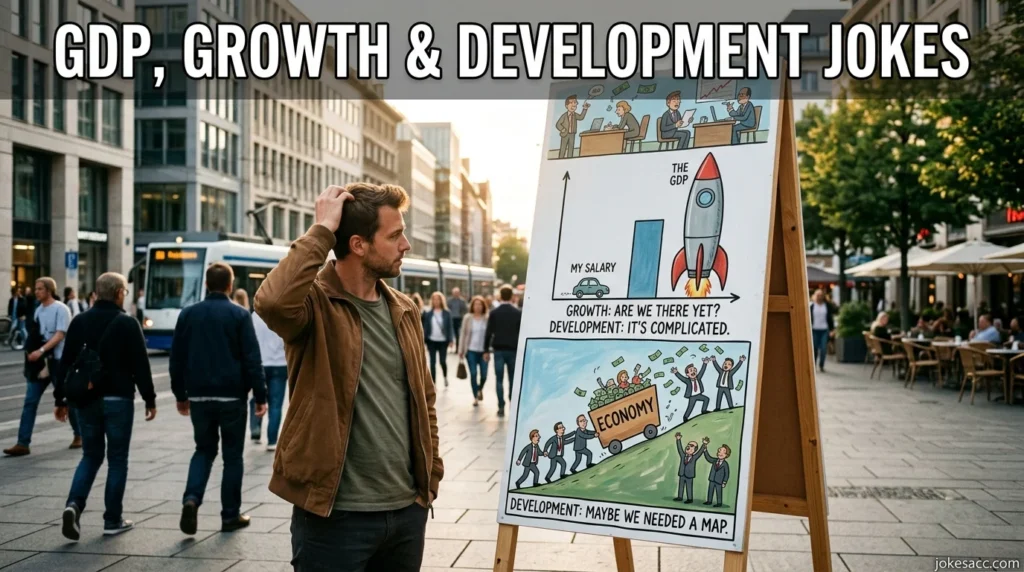
- GDP: Gross Domestic Puns — measuring national chuckles. 🇺🇳
- Economic growth sounds better with a laugh track. 📈
- My country’s largest export? Dad jokes. ✈️
- Development: when humor infrastructure improves. 🏗️
- Growth miracles sometimes start with a single pun. ✨
- Per capita comedy: smiles per person, per hour. 😊
- High GDP, low giggle-per-capita? Fix with puns. 🛠️
- Emerging markets in humor often surprise the world. 🌍
- Human capital includes the ability to tell a good joke. 🎓
- Industrial policy: subsidize comedy clubs. 🏛️
- Infrastructure for laughs: good timing and a mic. 🎤
- Inclusive growth means laugh access for all. 🤝
- Structural transformation: moving from tears to chuckles. 🔁
- Development requires investment in public joy. 💡
- Growth accounting: how much of it was a great punchline? 📊
Behavioral Economics & Decision Humor
- Loss aversion: people hate missing a punchline more than missing dessert. 🍰
- Anchoring: first joke sets expectations for quality. ⚓
- Framing matters—funny framing yields bigger laughs. 🖼️
- Nudge theory: a subtle grin encourages more laughs. 👉
- Bounded rationality: we decide jokes with limited patience. ⏳
- Status quo bias: the same old puns keep returning. 🔁
- Time inconsistency: promise to joke later, joke now. 🕰️
- Social preferences: we laugh more when others do. 👥
- Heuristics: quick laughs with simple rules of thumb. 🧠
- Endowment effect: your favorite joke seems funnier. 💎
- Availability bias: recent jokes feel the funniest. 🔁
- Sunk cost fallacy: keep telling a joke because you started it. 🚫
- Social norms make certain puns surprisingly effective. 🎭
- Behavioral interventions: put a joke on the syllabus. 📚
- Choice overload? Offer one great punchline instead. 🎯
Game Theory & Strategic Humor
- In a laugh game, best response is always a well-timed grin. 🤝
- Nash equilibrium: everyone laughs and nobody tries to out-pun. ⚖️
- Tit-for-tat: return a joke with an even better pun. 🔁
- Zero-sum? Not with humor—laughter is non-zero-sum. ➕
- Signaling: a good pun signals social intelligence. 📶
- Mixed strategies: alternate between dad jokes and zingers. 🎲
- Payoff matrix: laughter > awkward silence every time. 😄
- Coordination game: cue the laugh track for safety. 🎬
- Dominant strategy: the joke that always produces smiles. 🌟
- Commitment device: promise to laugh and you might mean it. 🤞
- Repeated games: consistent humor builds reputation. 🏅
- Cheap talk can be costly—use it sparingly. 🗣️
- Mechanism design: craft contexts for jokes to land. 🛠️
- Information asymmetry: narrator knows the punchline first. 🤫
- Evolutionarily stable strategy: keep puns wholesome. 🌱
Market Structure & Firm Behavior Jokes
- Monopoly: one comedian owns all the best punchlines. 👑
- Oligopoly: a few comedians collude on the punchlines. 🤝
- Perfect competition: everyone tells the same knock-knock story. 🚪
- Monopolistic competition: differentiate your jokes with style. 🎨
- Cartels in comedy? Only in college dorm rooms. 🛖
- Barriers to entry: timing, confidence, and a microphone. 🎤
- Price leadership: the funniest sets the tone for the night. 🌙
- Non-price competition: wardrobe and delivery matter. 👔
- Predatory pricing: undercutting with free jokes at open-mic. 🆓
- Market power: the ability to make people laugh on demand. 💪
- Product differentiation: observational humor vs. puns. 🔍
- Natural monopoly: that one friend who always wins the room. 🏆
- Contestable markets: open-mic nights keep standards high. 🎟️
- Sunk costs in comedy: you can’t take back a bad line. 🚫
- Efficiency: the punchline that generates maximum utility for minimal effort. ⚖️
FAQs
Q1: What are “economics puns and jokes”?
A1: They’re humorous wordplays and one-liners that riff on economic concepts — supply and demand, inflation, GDP, game theory, behavioral quirks, finance, and more — designed to make economics entertaining and memorable.
Q2: Who benefits from using economics jokes?
A2: Students, teachers, presenters, content creators, and anyone who wants to make complex economic ideas accessible and fun. Jokes can boost engagement, retention, and approachability.
Q3: Can economics jokes be used in classroom or presentations?
A3: Absolutely. Well-placed puns can lighten a dense lecture, refocus attention, and help students recall concepts by associating them with humor.
Q4: Are these jokes appropriate for professional settings?
A4: Many are — especially light, non-offensive ones. Tailor your selection to audience sensitivity: avoid jokes that trivialize real-world hardships or sensitive economic issues.
Q5: How do I create my own economics puns?
A5: Start with a concept (e.g., “elasticity,” “opportunity cost”), find words that sound similar or suggest imagery, and craft a short twist. Keep it concise and test it on friends.
Q6: What keywords should I include when sharing such content online?
A6: Use the target phrase economics puns and jokes along with related terms like supply and demand, inflation, macroeconomics, microeconomics, GDP, game theory, behavioral economics, finance to improve SEO.
Q7: Are there risks using jokes about economic hardship?
A7: Yes — avoid making light of unemployment, poverty, or crises in ways that could seem insensitive. Focus on conceptual humor and light-hearted industry satire instead.
Conclusion
Economics can be surprisingly funny when you give it a little creative spin. These economics puns and jokes are designed to make concepts stick, lighten lectures, and give your social feeds a clever boost. If one of these lines saved you a dull day or helped a student remember a tricky idea, share it — laughter has the best multiplier effect. Drop your favorite pun in the comments, tag a friend who needs a policy-level chuckle, or use one of these zingers in a classroom slide. After all, a good joke is the best kind of investment: low cost, high return, and guaranteed to compound smiles.